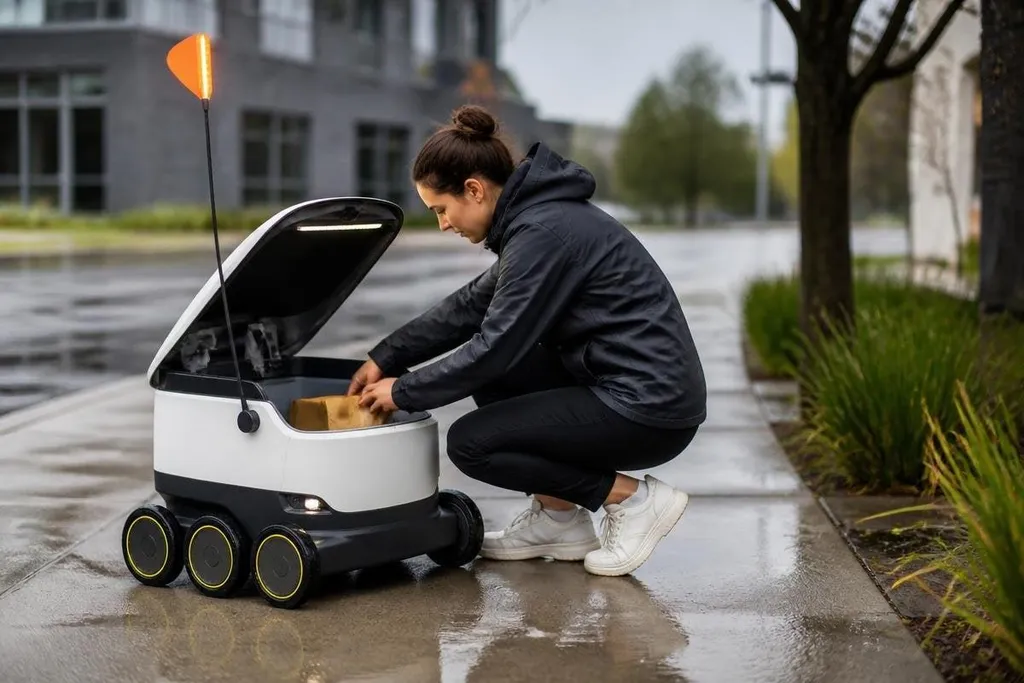
A delivery robot can move food, parcels, or medicine across a short route without a driver inside it. That can cut repeat trips for a shop or warehouse, but the robot still has to deal with people, curbs, weather, theft, and unclear responsibility.
- Best fit: short, repeat routes with few stairs and steady foot traffic
- Main gain: fewer routine handoffs for staff during busy periods
- Main risk: a blocked path can turn a simple delivery into a remote support job
Where delivery robots help
The strongest use case is a repeat delivery between known points. Following a mapped route, the robot can stop when its sensors detect an object and send an alert when it reaches the customer. Staff can then spend less time walking between buildings or carrying small loads across a site.
That works well when the route has firm pavement, clear access points, and a delivery that fits inside the robot’s compartment. A hospital campus, business park, university, or apartment complex may offer these conditions. A crowded street with broken pavement and many stairs gives the robot far less room to work.
The robot also keeps a record of its trip. Cameras, position data, and door or locker events can show where a delivery stopped and when the customer collected it. This helps an operator check a missed handoff, though the same data creates privacy duties.
Automation can also make delivery times easier to plan. A robot does not need a rest break, but it does need charging, remote support, and a route that matches its battery range. The work shifts from carrying goods to checking the system and fixing the cases it cannot handle alone.
The risks sit outside the route map
A route map cannot show every problem. A parked vehicle may block a curb cut. Road works may close a footpath. A person may stop in front of the robot, or a dog may react to its movement. Each case needs a safe stop and a clear way for someone to help.
Weather adds another limit. Rain can affect cameras and traction, while snow, ice, or loose gravel can make a path hard to cross. Heat can also affect batteries and electronics. The right operating range depends on the robot’s design, so a buyer needs the maker’s tested limits rather than a general claim about outdoor use.
Security is another concern. A delivery box can be taken, opened, or damaged before the customer arrives. The operator must decide how the compartment locks, how the customer proves their identity, and what happens when nobody collects the order.
A camera may help with a dispute, but it also records people in public spaces.
Responsibility needs a written answer before the first trip. The operator, site owner, delivery company, and robot maker may each control part of the process. Local rules can also set limits for sidewalk use, remote operation, camera recording, and access for people with disabilities.
A sidewalk robot can meet a local rule on paper and still block a wheelchair user at a curb cut. Dated delivery-robot reports from Robot24.com give the buyer named machines, test sites, route conditions, and handoff rules to compare before the next section measures the numbers that decide if the service works.
What the buyer should measure
A short pilot can reveal more than a smooth demonstration. Run the robot on the actual route, at the times when people use it, and record every stop that needs human help. Count blocked paths, failed handoffs, charging pauses, damaged goods, and support calls.
The price is more than the robot. Add charging equipment, software, remote operators, insurance, repairs, site changes, and staff time for loading and recovery. A robot that needs frequent rescue may move the cost from delivery staff to support staff without reducing the total work.
Accessibility needs a physical check. The robot must leave enough room for wheelchairs, mobility aids, and people walking in groups. It should also give a clear warning before moving and stop without forcing people into a road or another unsafe space.
A practical buying checklist
Use these checks before signing a supply contract:
- Map the route: mark stairs, steep slopes, curb cuts, narrow paths, gates, and places where vehicles stop.
- Run busy periods: test at lunch, shift changes, class changes, or other times when people fill the route.
- Set a support limit: record how many remote interventions one operator can handle safely.
- Check the handoff: test identity checks, failed collection, locked compartments, and damaged packages.
- Write the fault plan: name who responds to a blocked robot, dead battery, collision, lost parcel, or privacy complaint.
Delivery robots make sense when the route is short, repeatable, and easy to supervise. I’d skip a purchase until a live pilot shows that support calls and access problems stay within a cost the operation can carry.
The next useful number is not the robot’s top speed. It is the number of deliveries it completes on the real route without a person stepping in.